05/11/2026
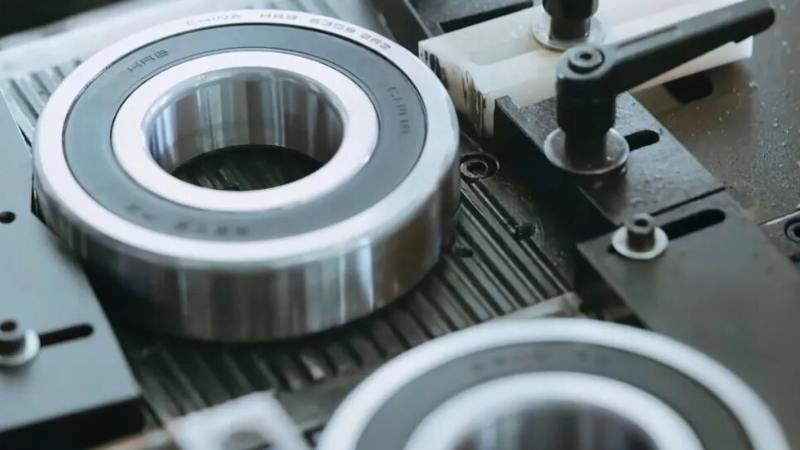
Jianlong Harbin Bearing Passed the National Intelligent Manufacturing CMMM Level 3 Assessment
Recently, Jianlong Harbin Bearing successfully passed the National Intelligent Manufacturing Capability Maturity Level (CMMM) Level 3 (Integration Level) assessment.
Read More
The platform fully accepts and supports third-party re-inspection of steel bars purchased in bulk. This is a routine and important step in ensuring the quality and fairness of bulk steel transactions.
The sampling frequency for third-party re-inspection follows the industry standard of "batch inspection, with 60 tons as the base and additional samples for quantities exceeding 40 tons". Chemical composition is mainly determined according to the furnace/tank number, while mechanical properties are sampled incrementally as the batch size increases. The platform accepts third-party re-inspections. The specific sampling and testing procedures can be further confirmed with the platform or your designated third-party testing agency during the order execution stage.
Yes, and for orders with strict bending requirements, we recommend sending samples for testing first to confirm the bending performance before making a bulk purchase.
Standard small-sized samples are usually provided free of charge, with the customer bearing the express delivery fee; after a formal order is placed, the sample shipping fee can be deducted from the payment for the goods.
Sample test results can serve as an important reference. Bending performance is closely related to material, thickness, rolling direction, surface quality, and processing technology. Sample test results can serve as an important reference. For bulk orders, it is recommended to clearly define the bending acceptance standards and non-conformance handling methods in the technical agreement.
If you have finalized your specifications, please send the following information to our email address cs@chinasteelmarket.com, and we will arrange samples for your inspection as soon as possible.
The most prominent advantage of plastic-coated steel pipes is their exceptional corrosion resistance. The construction industry typically involves complex environments where pipes are exposed to various corrosive media, such as acids, alkalis, salts, and chemical solvents. Coatings can effectively prevent these media from coming into direct contact, thus avoiding rust and corrosion of the steel pipes.
The coating of plastic-coated steel pipes not only prevents damage from the external environment, but also effectively resists corrosion inside the pipe. Because the coating material itself has strong chemical resistance and can withstand the erosion of various liquids, it is particularly suitable for conveying highly corrosive liquids or gases. With the protection of the coating, the service life of plastic-coated steel pipes is greatly extended, usually reaching several decades. When the coating is intact, it can provide protection for steel pipes for decades; however, once the coating is damaged during construction or use, localized corrosion can quickly spread from the point of damage. Rather, it depends primarily on the type of plastic material applied to the inner and outer surfaces.
The most common choices are epoxy resin (EP) and polyethylene (PE), each excelling in different areas.
Epoxy resin (EP) coating: the "top student" of chemical corrosion protection. Its resistance to strong acids, strong alkalis, and organic solvents is outstanding, and its adhesion to steel pipes is extremely strong. Therefore, it is the first choice for harsh corrosive environments such as the chemical and oil and gas industries. Its shortcomings lie in its brittle material, low flexibility, and poor impact resistance. It is prone to micro-cracks when subjected to drastic temperature differences or mechanical impacts.
Polyethylene (PE) coating: a "weather-resistant guardian" of physical protection. PE has excellent weather resistance and resistance to ultraviolet aging, good flexibility, and impact resistance, making it very suitable for municipal water supply and drainage pipes that are exposed or buried. Its main limitation is that its upper temperature resistance is relatively low (about 80℃), and as a non-polar molecule, its chemical bonding force with the steel pipe itself is not as good as that of epoxy, and it relies more on the hot melt process to ensure adhesion.
In practical engineering, a common configuration is "inner EP + outer PE": the inner layer uses epoxy resin to resist the chemical corrosion of the transported medium, while the outer layer uses polyethylene to resist atmospheric, soil and mechanical damage, achieving complementary performance.
China Steel Market
Empowering small and medium-scale steel purchasing
Hot search words:
China Rebar prices China Wire Rod Prices Welded Steel Pipe Prices