04/11/2025
Bao Gang United Steel Achieves New Breakthrough in Sales of High-strength Container Plate, Boosting the Development of Inner Mongolia's New Energy Storage Industry
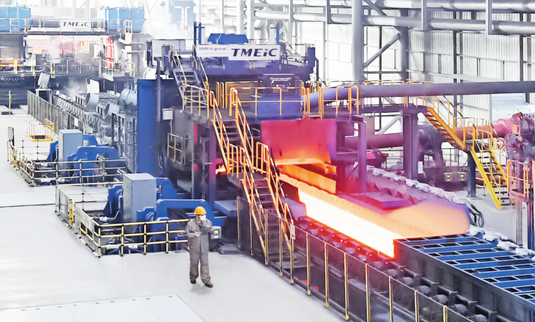
Recently, Bao Gang United Steel's new high-strength container plate was successfully applied to the first batch of grid-side independent new energy storage power station demonstration projects in Inner Mongolia.
Read More
31/10/2025
Anyang Steel's No. 2 Steelmaking and Rolling Department Successfully Completed the First Smelting and Rolling of X120Mn12 and Mn15Cr1 High-Manganese Wear-Resistant Steel
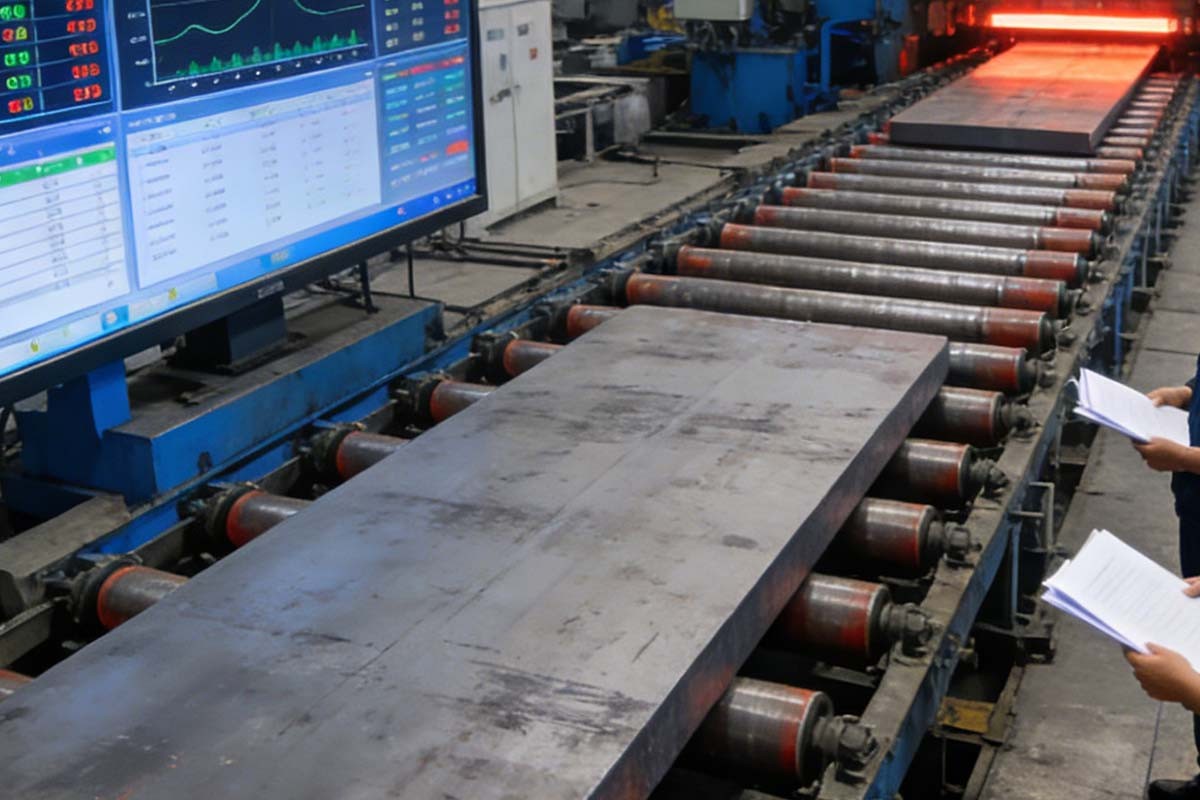
Recently, the No. 2 Steelmaking and Rolling Department of Anyang Iron and Steel successfully completed the full-process smelting and rolling of X120Mn12 and Mn15Cr1 high manganese wear-resistant steel.
23/10/2025
Jingye High-quality Steel Technology Successfully Trial-produced 0.20-0.25mm Ultra-thin Hard Rolled Coils
Recently, Jingye Group Technology Research Center, in collaboration with Gaopin Steel Technology Co., Ltd., successfully completed the trial production of 0.20-0.25mm ultra-thin hard rolled coils.
21/10/2025
Anyang Steel's Second Melting and Rolling Department Successfully Completed the First Smelting and Rolling of X120MN12 and MN15CR1 High Manganese Wear-Resistant Steels
Recently, the Second Melting and Rolling Operation Department of Anyang Steel successfully completed the full process of smelting and rolling of X120Mn12 and Mn15Cr1 high manganese wear-resistant steels, and all performance indicators of the finished products met the standards.
17/10/2025
Tiangang Company Successfully Trial Rolled Φ95mm Round Bar
Recently, the bar process of Tiangang Steel Rolling Plant has received another good news - the trial rolling of φ95mm round steel was successful!
29/09/2025
First batch of 57 tons delivered! Beigang New Materials successfully transitions marine-grade stainless steel plates from R&D to mass production.
18/09/2025
Fujian Sangang Group Successfully Produces Q1215 Free-Cutting Steel for the First Time
Recently, Sangang Group successfully produced Q1215 free-cutting steel for the first time, laying a solid foundation for the diversification of its product portfolio.
You can send us your warehouse structural drawings. Our team of technical engineers will conduct a professional analysis, comprehensively considering structural safety, economy, and supply convenience, to recommend the most suitable steel type (H-beams/I-beams/square tubes), specific specifications, material standards, and optimized usage estimates. After specification confirmation, we will provide a formal solution including detailed technical parameters, accurate FOB/CFR quotes, production cycle, and a complete set of material certificates (MTC). You can contact us via WhatsApp/WeChat +86 18810048889 and send the information.
The thickness of color steel tile is generally measured in millimeters (mm). Common thickness specifications cover multiple ranges from thinner to thicker, mainly including 0.2mm, 0.3mm, 0.4mm, 0.5mm, 0.6mm, 0.7mm, 0.8mm, 0.9mm, 1.0mm, 1.2mm, 1.5mm, etc.
Color steel tile comes in various thicknesses, depending on its intended use. Specifications are generally measured in millimeters (mm). Common thicknesses include: 0.2mm, 0.3mm, 0.4mm, 0.5mm, 0.6mm, 0.7mm, 0.8mm, 0.9mm, 1.0mm, 1.2mm, and 1.5mm.In practical applications, four main thicknesses are commonly used: 0.3mm, 0.4mm, 0.5mm, and 0.6mm.1. 0.3mm thick color steel tiles are thinner and suitable for temporary structures and warehouses with lower load-bearing requirements. This thickness is lightweight, easy to install, and relatively inexpensive.2. 0.4mm thick sheets are relatively stronger and suitable for small factories and garages with certain load-bearing requirements, combining strength and economy.3. 0.5mm thick sheets are suitable for large buildings and industrial facilities, such as large factories and stadiums, offering good load-bearing capacity and resistance to wind and rain erosion.4. 0.6mm thick sheets are a thicker specification, used in applications requiring high load-bearing capacity and durability, such as roofs of high-rise buildings and exterior walls of important industrial facilities.
Production Processes:Hot-dip galvanized pipe: The steel pipe is immersed in a molten zinc furnace. At high temperatures, the zinc reacts with the steel to form a zinc-iron alloy layer, which is then coated with a pure zinc layer. This process typically takes place at around 400℃.Cold-dip galvanized pipe: Also known as electro-galvanizing, this process involves electrolysis to coat the surface of the steel pipe with a layer of zinc. This process is carried out at room temperature and does not form a zinc-iron alloy layer; the coating is primarily pure zinc.Coating Performance:Hot-dip galvanized pipe: The coating is thicker, generally over 35 micrometers. The coating adheres tightly to the steel pipe surface, is uniform, has strong adhesion, and good corrosion resistance. The zinc-iron alloy layer further strengthens the bond between the coating and the steel substrate, resulting in good wear resistance.Cold-dip galvanized pipe: The coating is thinner, generally between 5-15 micrometers. The coating adhesion is weaker, and the corrosion resistance is relatively poor, making it more susceptible to damage from the external environment.Application Areas:Hot-dip galvanized pipe: Due to its excellent corrosion resistance and wear resistance, it is widely used in construction, machinery, coal mining, chemical industry, power generation, railway vehicles, and the automotive industry. It is particularly suitable for outdoor environments, humid areas, and highly corrosive environments.Cold-dip galvanized pipe: Due to its thinner coating and weaker corrosion resistance, it is mostly used in interior decoration, electrical appliance manufacturing, and light industrial products. It is suitable for dry environments.
The core difference between hot-dip galvanized and cold-dip galvanized steel pipes stems from their drastically different production processes, which directly determine their performance, appearance, and applications.1. Fundamentally Different Processes and Coatings:Hot-dip galvanizing uses a "hot-dip coating" process, immersing the steel pipe in molten zinc at approximately 450°C. A metallurgical reaction occurs at high temperature, causing a strong bond between the zinc-iron alloy layer and the substrate. The coating is very thick (typically exceeding 60 micrometers) and has extremely strong adhesion.Cold-dip galvanizing is actually "electro-galvanizing," where zinc ions adhere to the surface of the steel pipe at room temperature through electrolysis, forming a pure zinc coating. The coating is very thin (typically 5-20 micrometers), and the adhesion is mainly physical adsorption.2. Significant Differences in Performance and Appearance:Corrosion Resistance: Due to its thick and dense coating, hot-dip galvanized steel pipes have extremely strong corrosion resistance and can be used for decades in harsh outdoor environments. Cold galvanizing results in a thinner coating with weaker protection, primarily used in dry environments or for short-term rust prevention.Mechanical Properties: Hot-dip galvanizing involves high temperatures, which slightly reduce the strength of the base material (low-carbon steel) but increase its toughness. Cold galvanizing, however, essentially does not alter the mechanical properties of the base material.Appearance: Hot-dip galvanized surfaces are rougher, often with zinc bloom, and have a dark silver color. Cold-galvanized surfaces are smoother, more uniform, and brighter, resulting in a more aesthetically pleasing appearance.3. Cost and Application ScenariosCost: Hot-dip galvanizing is a complex and energy-intensive process, leading to higher costs. Cold galvanizing is a simpler process with lower costs.Applications: Based on these characteristics, hot-dip galvanized steel pipes are mainly used in heavily corrosive outdoor environments with long-term exposure, such as power transmission towers, highway guardrails, outdoor steel structures, and water pipelines. Cold-galvanized steel pipes are mostly used in indoor environments where aesthetics are important and the environment is dry, such as electrical wiring in home decoration, furniture frames, and small components.When selecting, a comprehensive decision should be made based on the use environment, anti-corrosion life requirements and budget.
China Steel Market
Empowering small and medium-scale steel purchasing
Hot search words:
China Rebar prices China Wire Rod Prices